Resurface or Replace? What to Do With a Cracked, Faded Concrete Patio or Driveway
Most tired concrete has a surface problem, not a structural one, and the two call for very different fixes.
October 27, 2026 · 4 min read
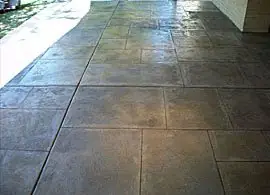
A concrete patio or driveway rarely fails all at once. First comes a hairline crack, then a faded patch where the afternoon sun hits hardest, then a chipped edge you start stepping around without thinking about it. One day you look out the window and the slab that used to be fine looks worn out. The question most homeowners ask next is whether the whole thing has to come out or whether it can simply get a new face.
The honest answer depends on what is actually wrong. This guide walks through how to sort the damage, what resurfacing can and cannot do, and when replacement really is the better call.
Sort the damage into two piles
Surface problems and structural problems can look alike from the kitchen window, but they lead to different answers. Surface problems include fading, staining, chipping, rough or pitted patches, and cracks that have stayed put. Structural problems include a slab that has dropped or heaved, a crack wide enough that one side now sits higher than the other, or a base that has washed out from underneath.
Resurfacing is built for the first pile. A good overlay bonds to sound concrete and gives it a new face. It is not a way to prop up a slab that has lost its footing. If the base is the problem, whatever you put on top will follow the slab as it moves, and a contractor who cares about the result will say so before you commit to anything.
A quick walk-around test
Before you call anyone, take ten minutes and walk the slab with a phone camera. You are looking for answers to a few simple questions.
- Is the slab level end to end, or does it tilt toward the house or dip in the middle?
- Do the cracks line up flush on both sides, or does one edge sit higher than the other?
- Is the surface itself flaking, chipping or stained, while the slab underneath feels solid?
- Does water drain away from the house and off the surface, or does it pool?
- Do you want the same grey slab back, or would you rather have a different color or pattern?
If most of your answers point to cosmetic wear on a slab that is solid and reasonably level, resurfacing is worth a serious look. If the slab has dropped, heaved or lost its base, say so when you ask for an estimate. Photos of those spots help a lot.
What a resurfacing job covers
Color Country Resurfacing, based in Grand Junction, works on driveways, patios, garage floors, concrete floors and pool cooling decks, for both homes and commercial properties. Their approach is strong, super-durable concrete overlays and sealants applied over concrete or any masonry surface, and concrete leveling is included in the work.
The finish itself is where resurfacing gets interesting, because you are no longer stuck with plain grey. The options include:
- A seamless epoxy finish
- A broom finish for traction
- Anti-slip additives where the surface gets wet
- Custom colors, matched to your home's exterior or décor at no charge
- Stamped-concrete patterns, or the look of flagstone, slate, sandstone and other natural stone
Why color and pattern change the math
When you replace a slab, you pour a new slab, and a new slab is plain concrete. You can add color or stamping to a fresh pour, but you are paying for demolition and a full new pour before you get to any of that. Resurfacing lets you spend your attention on how the finished surface looks and feels. A patio that has been the same dull grey for fifteen years can become a warm flagstone pattern. A cracked entry walk can become a clean broom-finished path that is easier to walk on in the morning frost.
The company also notes that resurfacing can come at a fraction of the cost of replacement. Because every slab is different, they do not publish a figure, and the way to find out what applies to yours is a free estimate.
When replacement is the better call
There are honest cases where tearing out is the right answer. A slab that has settled badly, a section that has broken into pieces, or a patio whose base keeps washing out will not hold a new surface for long. In those cases, fixing the cause comes first, and a new finish can go over the repaired area afterward. If a contractor looks at your slab and tells you that overlay is not the right fit, that is useful information, not a lost sale.
What resurfacing does well is take a slab that is sound but ugly and make it something you are glad to walk across.
Getting an answer for your own slab
The simplest way to settle resurface versus replace is to have someone look at it. Take a few photos, jot down the rough length and width, and note the look you have in mind. Then call (970) 250-9448 or use the contact page on this site. Estimates are free, and the company says it responds to every inquiry and provides estimates within two weeks. Visits are by appointment, Monday through Friday, 10 am to 6 pm.
You can read more about the process on the concrete repair and resurfacing page at /services/concrete-repair-and-resurfacing, or browse finished patios and walkways in the gallery. Color Country Resurfacing is licensed, bonded and insured, a certified Granicrete installer, and happy to provide references on request.
Color Country Resurfacing, (970) 250-9448
Call (970) 250-9448More articles
Countertop Refinishing vs. New Counters: What Changes in a Matter of Hours
A stone-look overlay can turn laminate or tile into a granite or marble finish without ripping out the kitchen.
Freeze-Thaw and Concrete in Western Colorado: Why Overlays and Sealers Matter
Water is the quiet enemy of every slab, and a protective surface layer is how you keep it out.